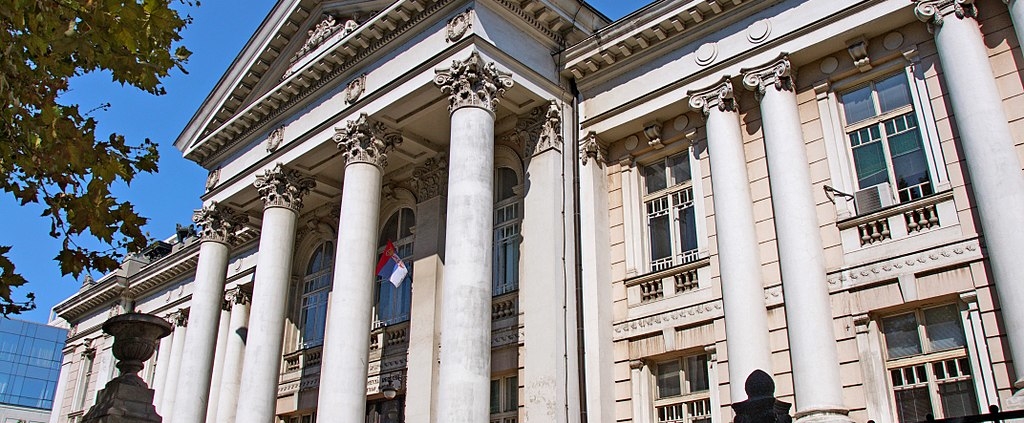
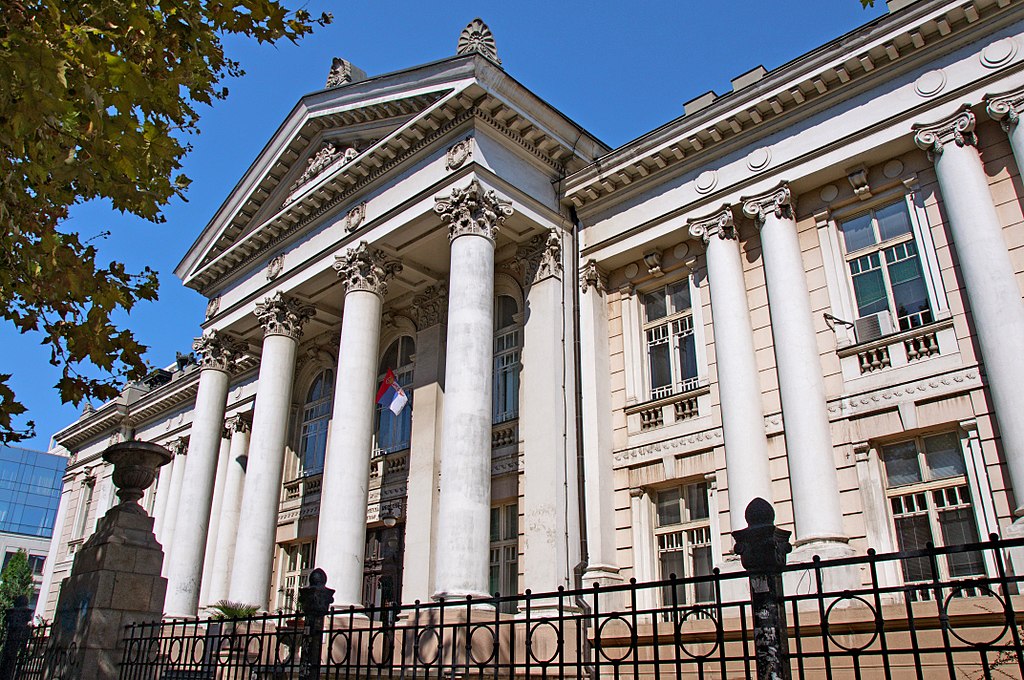
A new digital library was recently established at the University Library „Svetozar Marković“ in Belgrade, Serbia, initially populated by novels from the Serbian contribution to the ELTeC corpus. Users of the library can simultaneously read a digital facsimile of a copy of the chosen novel, as well as a text-only version.
Congratulations to our Serbian colleagues for supplementing their contribution to ELTeC with rich and valuable evidence of the novels’ material and bibliographical origins.
https://www.distant-reading.net/wp-content/uploads/1024px-Univerzitetska_biblioteka_Beograd_10.jpg6801024Justin Tonrahttps://www.distant-reading.net/wp-content/uploads/distantreading_logo-high-300x138.pngJustin Tonra2020-03-09 12:01:562020-03-09 12:01:57Digital Library of Serbian ELTeC Novels
This is a translation of an article about our recent Action meeting in Málaga, written by Cristina Fernández and originally published in Málaga Hoy on 18 February 2020. We are grateful for permission to publish this translation of the original article.
The project tries to search through distant reading for a common tradition in the 19th century novel
It would be absolutely impossible for a researcher to read all the novels written in 19th century Europe in an attempt to discover a common literary tradition in them. Not only would they have to live a thousand lives, but they would also have to know dozens of languages and be familiar with the many distant cultures. Now, computer methods can help in the study thanks to what Franco Moretti called distant reading.
Since November 2017, a four-year COST project financed by the European Union within its Horizon 2020 programme has brought together more than 200 people from some thirty countries in this task, providing a large and representative collection of texts in 12 languages to enable them to analyse common elements among themselves. From 17th to 19th February, more than fifty participants from 24 countries are meeting at the University of Malaga.
Literature to understand the world
Rosario Arias, professor of English Philology at UMA, is hosting the group that will share the different advances in the Link by UMA building on the Teatinos campus for three days. Christof Schöch, from the University of Trier in Germany, is the project’s Principal Investgator.
“Normally you read one novel, three or five to write a research paper but you can’t read thousands of texts because it takes time, and what we don’t want is for neglected texts to be forgotten,” Schöch explains. “You can use the computer and distant reading to get to more texts,” he adds.
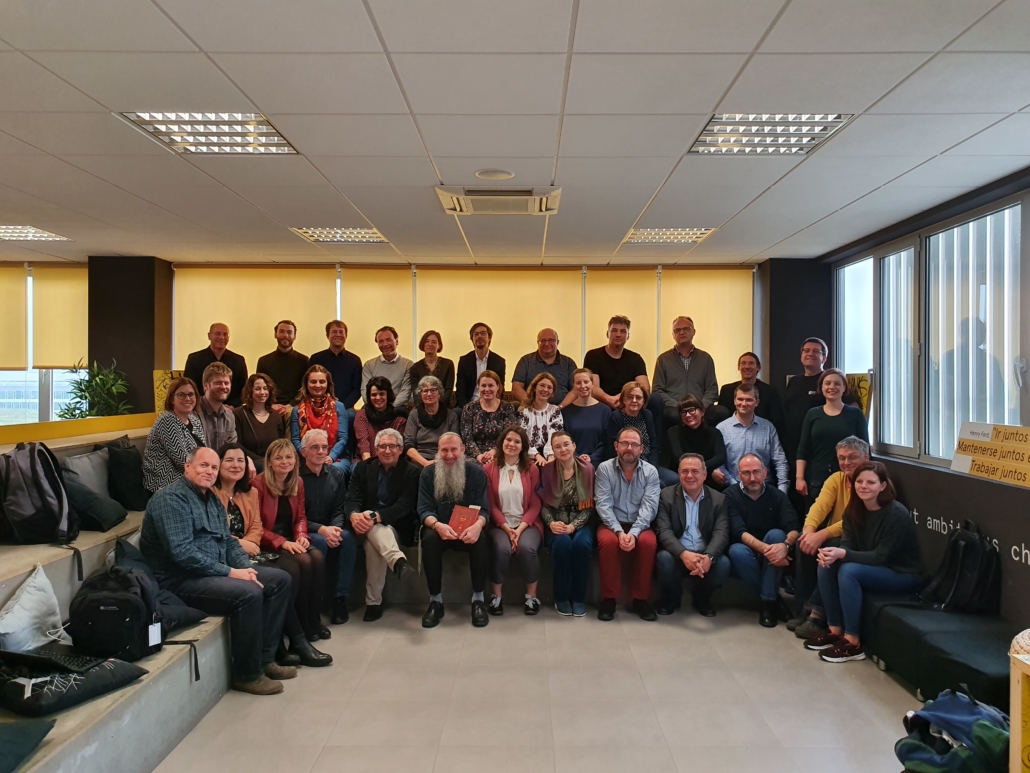
Our Action members in Málaga
Almost a thousand digitized works written between 1840 and 1920
Project researchers are building a multilingual European literary text collection that already contains nearly a thousand digitized volumes published between 1840 and 1920 and a dozen languages. The aim is to reach 2,500.
“From each national tradition we are trying to select texts that are representative, from authors considered canonical and others less known, from men and women, short or longer novels,” explains Justin Tonra, a project participant from Ireland.
“This project tries to make a transnational comparison, but it is very difficult because each tradition is in itself different. That is why the project is very broad, it has many challenges, because we compare multilingual and multicultural traditions,” adds Tonra.
The Principal Investigator indicates that “we try to look for characteristics, features, that are easily comparable and that are common to different traditions such as names of places, of authors, of philosophers, of cities… it is a matter of tracing those elements”.
A collaborative and integrative work
Also, as Rosario Arias points out, “to find out if there is such a thing as what we suppose to be in the 19th century, which is a transition from the omniscient person to a more introspective narrative”. The description of professions, the importance of social class or religion, whether the novel takes place in rural or urban settings, whether this migration from the countryside to the city can be traced in different traditions and whether the same thing happens in the Slovenian, Greek, Italian or Spanish novel are questions to which they seek answers.
“The most relevant part of the project is not the tools, which are very interesting in themselves, nor the texts, above all it is to seek and propose the foundations of a European cultural identity with the collaboration of many individuals from different traditions, it is a very inclusive project, very integrating, the path is also part of the process, that is why we want to do it in a cooperative way, in a network”, says Schöch.
The answers are not easy, they are not black and white, they are difficult to reach because we are working with many researchers, many texts, many traditions, but the process itself is worth it. Until now, there has been no work at this level or in such a global and complete way on European literary history.
https://www.distant-reading.net/wp-content/uploads/distantreading_logo-high-300x138.png00Justin Tonrahttps://www.distant-reading.net/wp-content/uploads/distantreading_logo-high-300x138.pngJustin Tonra2020-03-09 11:02:032020-03-09 11:09:43UMA welcomes experts in European literature from 24 countries
We may request cookies to be set on your device. We use cookies to let us know when you visit our websites, how you interact with us, to enrich your user experience, and to customize your relationship with our website.
Click on the different category headings to find out more. You can also change some of your preferences. Note that blocking some types of cookies may impact your experience on our websites and the services we are able to offer.
Essential Website Cookies
These cookies are strictly necessary to provide you with services available through our website and to use some of its features.
Because these cookies are strictly necessary to deliver the website, refusing them will have impact how our site functions. You always can block or delete cookies by changing your browser settings and force blocking all cookies on this website. But this will always prompt you to accept/refuse cookies when revisiting our site.
We fully respect if you want to refuse cookies but to avoid asking you again and again kindly allow us to store a cookie for that. You are free to opt out any time or opt in for other cookies to get a better experience. If you refuse cookies we will remove all set cookies in our domain.
We provide you with a list of stored cookies on your computer in our domain so you can check what we stored. Due to security reasons we are not able to show or modify cookies from other domains. You can check these in your browser security settings.
Other external services
We also use different external services like Google Webfonts, Google Maps, and external Video providers. Since these providers may collect personal data like your IP address we allow you to block them here. Please be aware that this might heavily reduce the functionality and appearance of our site. Changes will take effect once you reload the page.
Google Webfont Settings:
Google Map Settings:
Google reCaptcha Settings:
Vimeo and Youtube video embeds:
Privacy Policy
You can read about our cookies and privacy settings in detail on our Privacy Policy Page.