One of the principal aims of our Action, Distant Reading for European Literary History, is to build a multilingual European Literary Text Collection (ELTeC), ultimately containing around 2,500 full-text novels in at least 10 different languages. Today, we are pleased to announce the first public release of ELTeC, with nine language collections included!

The ultimate aim is for ELTeC is to provide multiple collections of 100 novels published between 1840 and 1920 in their original languages. Work to add more novels to ELTeC is ongoing, as we aim to build a corpus which will aid us in our task to develop the resources necessary to change the way European literary history is written. Progress towards our goal and current statistics about the collections can be found on this ELTeC Summary page: https://distantreading.github.io/ELTeC/

Language collections in this first release are in German, English, French, Italian, Norwegian (Bokmål and Nynorsk), Portuguese, Romanian, Serbian, and Slovenian. The collections can be downloaded here: https://zenodo.org/communities/eltec/
Each novel is encoded in compliance with the guidelines of the Text Encoding Initiative (TEI), and we have published details about the criteria for corpus composition and encoding guidelines here: https://distantreading.github.io/, and about our TEI schemas here: https://github.com/COST-ELTeC/Schemas/.

As work progresses on ELTeC, we invite you to use our collections. Feedback from the community would be very welcome as we improve our collections and work towards future releases. Please feel free to write to me or relevant Working Group Leader, Carolin Odebrecht with your comments, or submit to our GitHub issue tracker. If you are interested in becoming a member of our Action, find out more here: https://www.distant-reading.net/about/participate/.

Thanks to all of our colleagues from across Europe (and beyond) who have helped us to reach this important milestone!

First call for Grant Period 3, for Missions occurring before March 31st, 2020.

COST Action “Distant Reading for European Literary History” (CA16204) is launching a new call for applications for Short Term Scientific Missions (STSMs). The deadline for applications is November 30th, 2019.

Our Action is particularly interested in the following topics, which are closely linked to the Action’s activities at the moment. Priority will be given to STSM applications regarding:

  1. Producing EPUBs from ELTeC texts 
  2. Interface to ELTeC for search, filtering and download of texts
  3. More texts for addition to the Action’s collection
  4. Annotating training sets for UD pipe
  5. Tackling Research Questions from WG3 to WG2  

Applicants who are interested in one or several of the topics above should contact the Action’s STSM Coordinator (catherine.kanellopoulou@gmail.com) in order to obtain more information on them.

What is the COST Action “Distant Reading for European Literary History”? We aim to create a vibrant and diverse network of researchers jointly developing the resources and computational methods necessary to change the way European literary history is written. Fostering insight into cross-national, large-scale patterns and evolutions across European literary traditions, we will facilitate the creation of a broader, more inclusive and better-grounded account of European literary history and cultural identity.

What are Short-Term Scientific Missions (STSM)? STSMs aim to strengthen the existing COST Actions by allowing scientists to go to an institution or laboratory in another COST country to foster collaboration, to learn a new technique or to collect data using instruments and/or methods not available in their own institution/laboratory. They are particularly intended for Early Career Investigators (PhD students or researchers who received their PhD no more than 8 years ago).

For information about the Action, please see: http://www.cost.eu/COST_Actions/ca/CA16204 and http://www.distant-reading.net.

For information on the application process, please see: https://www.distant-reading.net/calls/stsm-winter-2019/

Distant reading, driven by the development of digital technology in the human sciences, has emerged as one of the most prolific approaches to literary texts. Maps, graphs and trees, in Moretti’s (2005) words, allow us to reread famous works in a new way, or to look at large amounts of texts that have long been forgotten. However, often, approaches to distant reading disregard the acquisition of the data to be observed: Where do they come from? How are they created?

Our training school proposes to return to the crucial stage of data acquisition, focusing on details of the production chain of literary data. During the two-day course, we will start with OCR (optical character recognition), which makes it possible to transform an image into machine-readable text, addressing the difficulties introduced by the variation of graphic systems or the materiality of old artifacts. The second – decisive – step is the encoding in XML-TEI, which transforms the text into a usable database and allows to addition of more information to the text (e.g., author, gender, period) for ensuing analysis. The third and final step is the analysis with R, which allows hypotheses to be tested and patterns to be explored by analysing and visualising data.

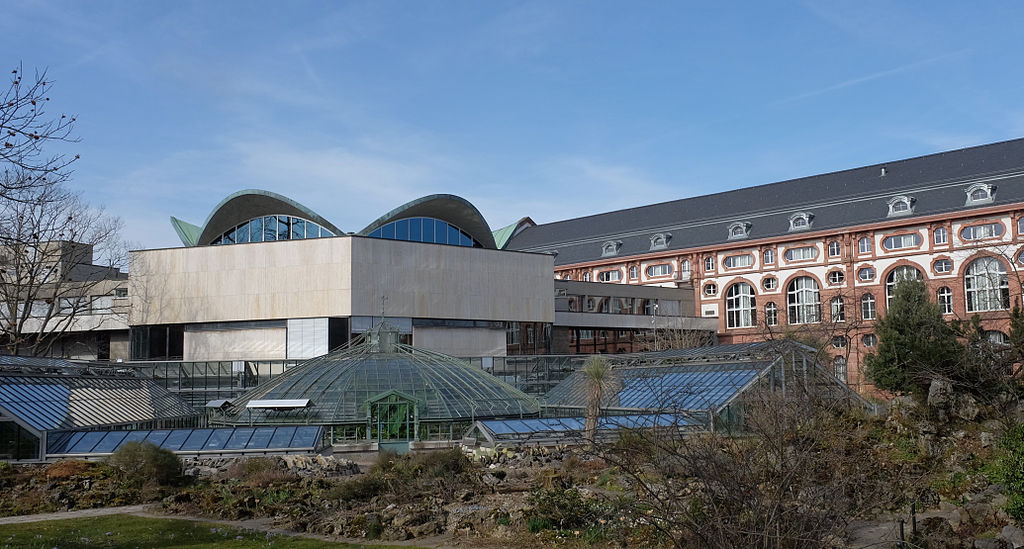
Basel Public and University Library, venue for the Training School

With a strong emphasis on practical experience, this training school is geared towards building the framework for a first multilingual Swiss literary corpus (French, Italian and German). Tasks participating in its construction during the training school will provide an opportunity to discuss pertinent issues.

This course is part of a collective work carried out within the European COST “Distant Reading For European Literary History” project of which the organizers are the Swiss representatives: https://www.distant-reading.net/

The working language of the training school is English, knowledge of at least one of the three languages of the literary data (French, Italian, German) is also required.

All information, including the full training school programme, can be found in French, German, and Italian here and here.

Registration process: target group of the training school isdoctoral students affiliated with the universities of Basel, Bern, Fribourg, Geneva, Neuchâtel and Lausanne as well as from the EPFL. Post-doc researchers can apply via a short email pending registration of PhD students who have priority.

Please register by sending an email to alexandre.camus@unil.ch  Participation is free of charge for doctoral students. All travel and accommodation expenses are covered by the doctoral program.

Practical information:

  • Course title “Distant Reading – Tools and Methods”
  • Instructors: Simon Gabay, Berenike Herrmann, Simone Rebora, Elias Kreyenbühl
  • Date: 12 and 13 December 2019
  • Location: Basel Public and University Library (UB)
  • Schedule: 9am-5.30pm