Title page of: Vers le pôle en aéroplane

The COST Action Distant Reading for European Literary History (CA16204) is proud to announce the release of version 1.0.0 of the European Literary Text Collection, ELTeC for short. The latest release comes almost exactly one year after our first significant release and brings more languages as well as more novels per language to the table, plus of course a host of improvements to corpus composition, metadata, textual markup and transcriptions. (Hurried readers can find the list of all included collections with links to the texts in our ELTeC umbrella repository.)

Title page of: Vers le pôle en aéroplane
The title page of Jehan Gilbert’s novel Vers le pôle en aéroplane (1912). Source: Gallica, https://gallica.bnf.fr/ark:/12148/bpt6k65899h

With 10 collections of at least 50 novels, including 5 collections that have reached our target of 100 novels per language, and 884 novels in total, this is an exciting new release! Complete collections of 100 novels are now available for English, French, Hungarian, Portuguese and Slovenian, and substantial collections of more than 50 novels are available for German (98 novels), Spanish (81), Romanian (80), Serbian (67) and Swedish (58). This release has been made possible by the hard work and dedication of the individual collection editors and contributors, and of WG1 leaders Carolin Odebrecht and Lou Burnard: we thank them all! A collection like ELTeC, requiring expertise in many different literary traditions, can only be a collaborative effort.

Please be reminded that ELTeC aims to provide roughly comparable collections of 100 novels each in at least 10 different European languages. All novels included in each collection were published between 1840 and 1920 and we aim to represent the largest possible variety of the production of this time. In particular, we aim to include substantial proportions of novels written by female authors, novels which have not become canonized, short and long novels, and novels published early and late in our selected timeframe. In addition, all novels are carefully encoded in a precisely defined subset of the Guidelines of the Text Encoding Initiative. As a result, ELTeC includes many novels that have been provided in a state-of-the art XML-TEI format, or even in any digital format, for the first time. An example of one such novel is Jehan Gilbert’s Vers le pôle en aéroplane first published in 1912, whose title page is pictured above. ELTeC is being curated on Github and collections are archived on Zenodo.

The 10 collections included in the current release are in the limelight today. Let’s not forget, however, that there is a host of additional languages in preparation, and many of them have already gathered very substantial numbers of novels. In fact, we have passed the milestone of 1000 novels included in all ELTeC collections some time ago already. To make this work visible, we provide an overview of our ongoing work on the various ELTeC collections online. There will be more releases over the coming year that we certainly expect to include some additional collections as well. So please watch this space or follow us on Twitter!

News of a new ELTeC-related project from Action member Roxana Patras.

Pop-Lite: Romanian Popular Novels and Their Sub-genres during the Long Nineteenth Century: digital editing and corpus analysis is a pioneer Romanian initiative that combines DH tools and methods with traditional approaches to Romanian literary history and theory. The project aims to address the lack of digitized resources, corpora, and customized tools for the treatment of modern Romanian typographic varieties, to save non-canonical works from oblivion, and to find practical solutions for processing and storage. The creation of an open-access literary corpus for the study of 19th-century Romanian popular novels and for the exploration of local subgenres (“hajduk”, “mystery”, “historical”, “sentimental”, and so forth) will enable a critical mass of researchers to engage in analyzing the effects of “distant reading” approaches to the Romanian patrimony as well as to arrive at a computationally-driven approach to genre theory. Traditional concepts such as literary canon, periodization, authorship, literary movement, genre, and others will be redefined through a threefold focus on: a. popular literature (para-literature, genre literature); b. 19th-century European contexts; c. digital literary studies.

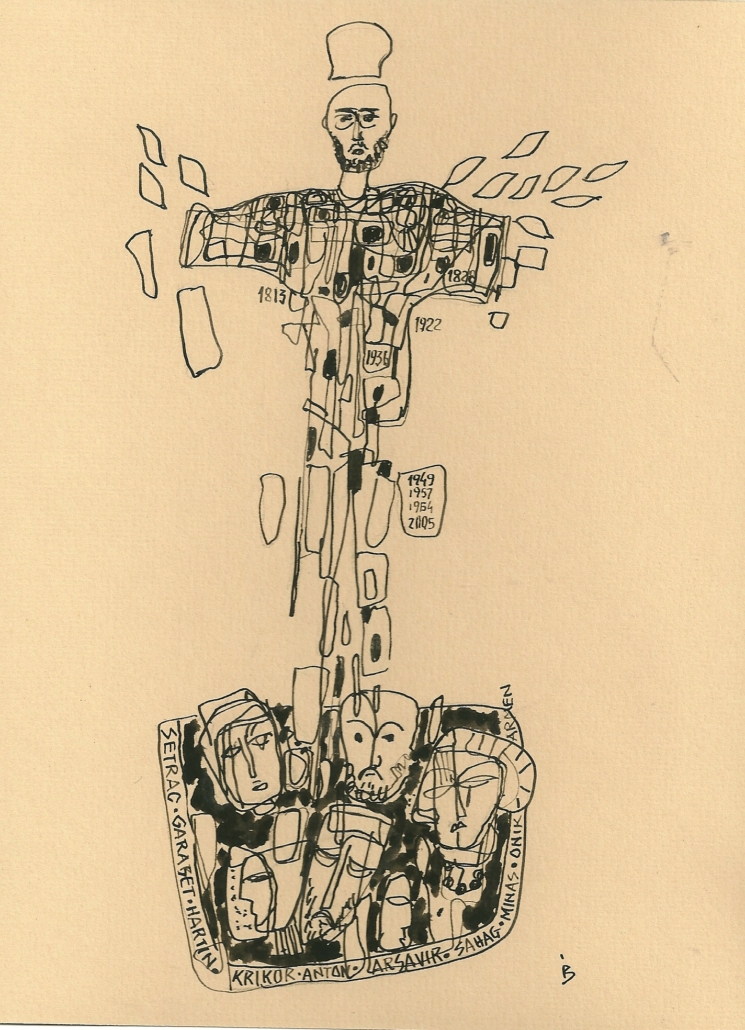
Illustration by Ionita Benea

Pop-Lite is a project that draws from the research experience acquired by its PI (Roxana Patras, “Alexandru Ioan Cuza” University of Iasi) and members while taking an active part in our COST Action, Distant Reading for European Literary History, and in the bilateral French-Romanian project Hai-Ro: Hajduk Novels in Romania during the Long Nineteenth Century: digital edition and corpus analysis assisted by computational tools.

Pop-Lite will start on 1 September 2021, and is funded by the Executive Agency for Higher Education, Research, Development, and Innovation Funding (Romania) under the program PN-III-P1-1.1-TE-2019.

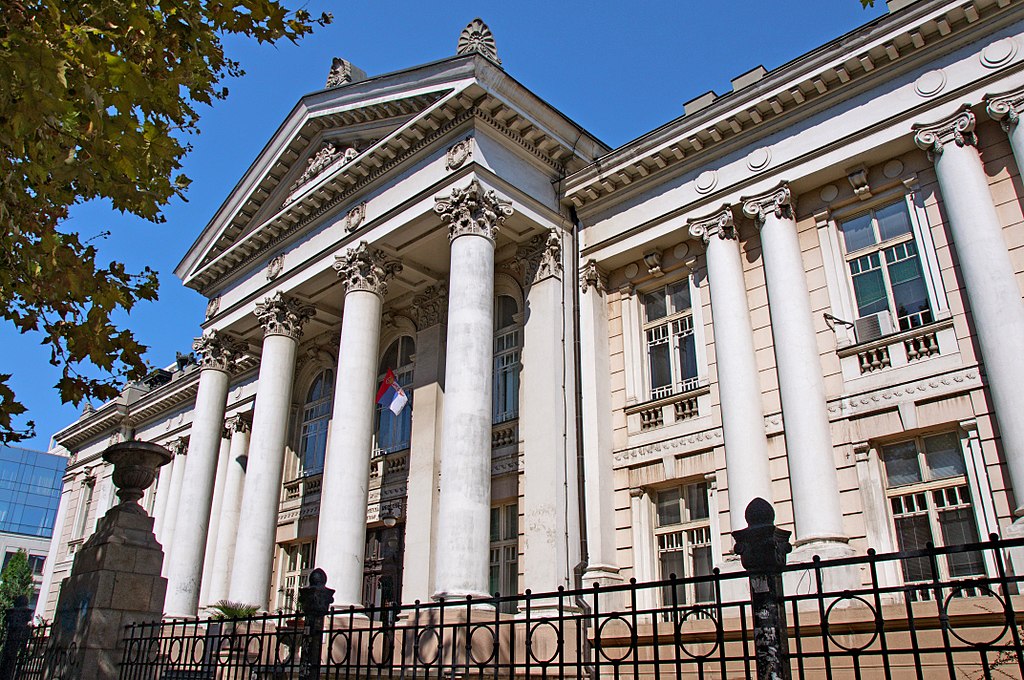
A new digital library was recently established at the University Library „Svetozar Marković“ in Belgrade, Serbia, initially populated by novels from the Serbian contribution to the ELTeC corpus. Users of the library can simultaneously read a digital facsimile of a copy of the chosen novel, as well as a text-only version.

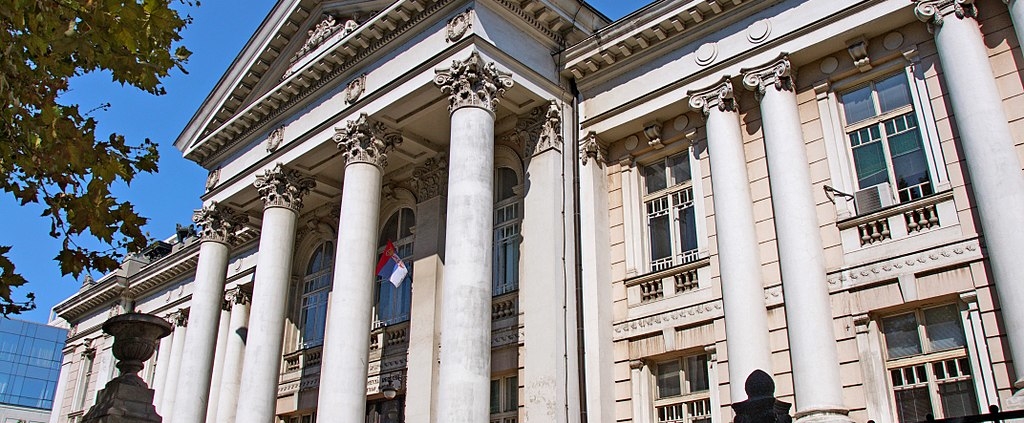
Svetozar Marković University Library, Belgrade.

Many researchers and volunteers from the University Library and the Association for Language Technologies and Resources participated in the preparation of the digital library. The work was partially supported by the Ministry of Culture and Information of Serbia.

Congratulations to our Serbian colleagues for supplementing their contribution to ELTeC with rich and valuable evidence of the novels’ material and bibliographical origins.

This is a translation of an article about our recent Action meeting in Málaga, written by Cristina Fernández and originally published in Málaga Hoy on 18 February 2020. We are grateful for permission to publish this translation of the original article.

The project tries to search through distant reading for a common tradition in the 19th century novel

It would be absolutely impossible for a researcher to read all the novels written in 19th century Europe in an attempt to discover a common literary tradition in them. Not only would they have to live a thousand lives, but they would also have to know dozens of languages and be familiar with the many distant cultures. Now, computer methods can help in the study thanks to what Franco Moretti called distant reading.

Since November 2017, a four-year COST project financed by the European Union within its Horizon 2020 programme has brought together more than 200 people from some thirty countries in this task, providing a large and representative collection of texts in 12 languages to enable them to analyse common elements among themselves. From 17th to 19th February, more than fifty participants from 24 countries are meeting at the University of Malaga.

Literature to understand the world

Rosario Arias, professor of English Philology at UMA, is hosting the group that will share the different advances in the Link by UMA building on the Teatinos campus for three days. Christof Schöch, from the University of Trier in Germany, is the project’s Principal Investgator.

“Normally you read one novel, three or five to write a research paper but you can’t read thousands of texts because it takes time, and what we don’t want is for neglected texts to be forgotten,” Schöch explains. “You can use the computer and distant reading to get to more texts,” he adds.

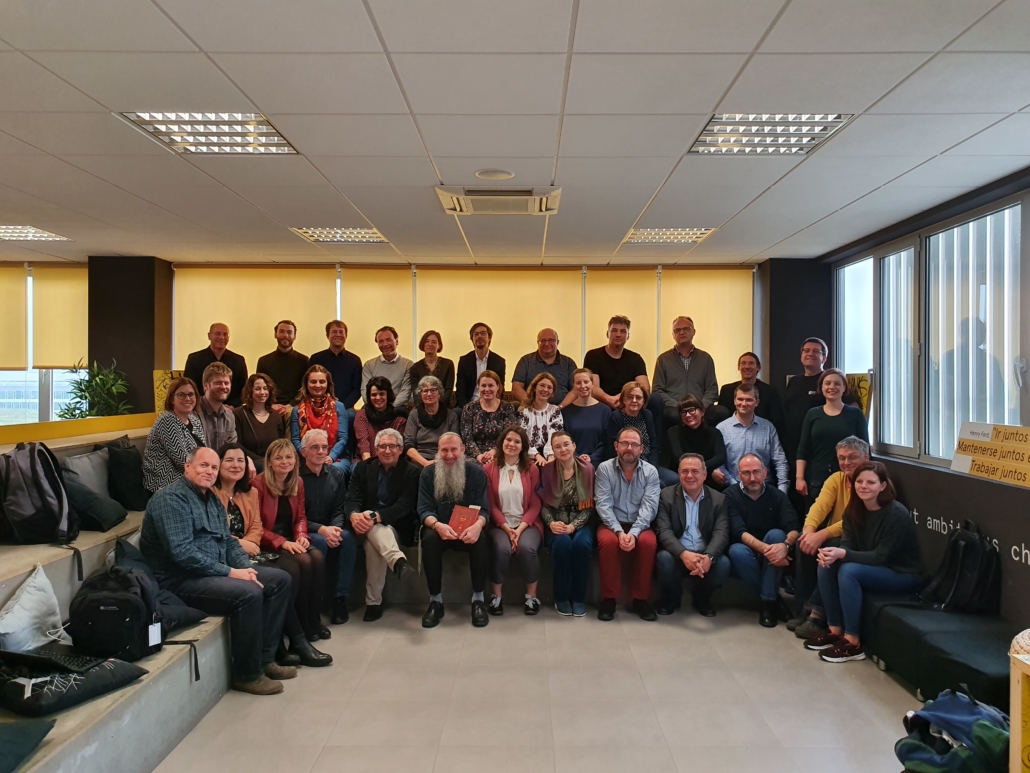
Our Action members in Málaga

Almost a thousand digitized works written between 1840 and 1920

Project researchers are building a multilingual European literary text collection that already contains nearly a thousand digitized volumes published between 1840 and 1920 and a dozen languages. The aim is to reach 2,500.

“From each national tradition we are trying to select texts that are representative, from authors considered canonical and others less known, from men and women, short or longer novels,” explains Justin Tonra, a project participant from Ireland.

“This project tries to make a transnational comparison, but it is very difficult because each tradition is in itself different. That is why the project is very broad, it has many challenges, because we compare multilingual and multicultural traditions,” adds Tonra.

The Principal Investigator indicates that “we try to look for characteristics, features, that are easily comparable and that are common to different traditions such as names of places, of authors, of philosophers, of cities… it is a matter of tracing those elements”.

A collaborative and integrative work

Also, as Rosario Arias points out, “to find out if there is such a thing as what we suppose to be in the 19th century, which is a transition from the omniscient person to a more introspective narrative”. The description of professions, the importance of social class or religion, whether the novel takes place in rural or urban settings, whether this migration from the countryside to the city can be traced in different traditions and whether the same thing happens in the Slovenian, Greek, Italian or Spanish novel are questions to which they seek answers.

“The most relevant part of the project is not the tools, which are very interesting in themselves, nor the texts, above all it is to seek and propose the foundations of a European cultural identity with the collaboration of many individuals from different traditions, it is a very inclusive project, very integrating, the path is also part of the process, that is why we want to do it in a cooperative way, in a network”, says Schöch.

The answers are not easy, they are not black and white, they are difficult to reach because we are working with many researchers, many texts, many traditions, but the process itself is worth it. Until now, there has been no work at this level or in such a global and complete way on European literary history.